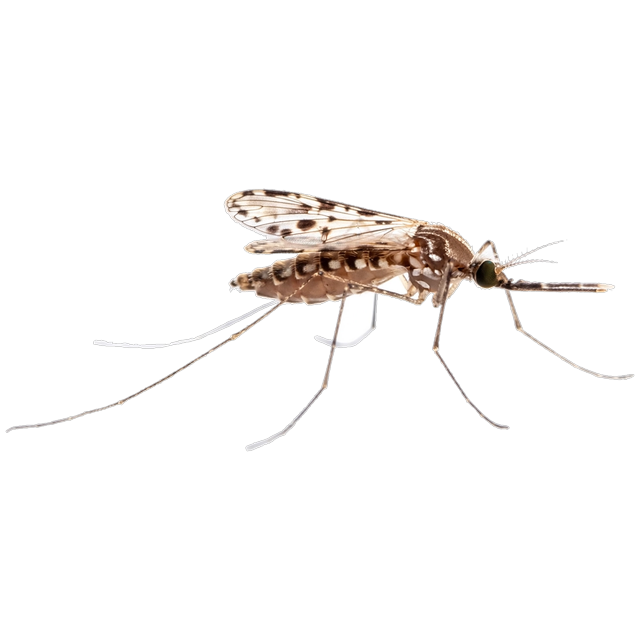
 Malaria mosquito
Anopheles spp. Meigen, 1818
Malaria mosquito
The mosquito genus behind malaria, present in Ontario, but malaria itself is long gone from here.
- Order
- Diptera
- Family
- Culicidae
- Group
- Mosquitoes
- Ontario status
- Present, no local disease transmission (reference)
Why it matters
Globally, the deadliest animal genus on earth, malaria kills hundreds of thousands yearly, almost all via African Anopheles gambiae. In Ontario: a reference species for the exam and the science, not a health threat. Malaria ('the ague') did occur in 19th-century Ontario and vanished with drainage and housing improvements.
Origin
A worldwide genus; the eastern North American species (Anopheles quadrimaculatus complex) is native here.
Behavior
Bites at dusk and night. In Ontario it is a minor nuisance biter; the malaria connection is historical, not current.
Living conditions
Breeds in clean, still water with vegetation, ponds, marshes, swamps. Larvae lie flat at the water surface.
Signs of presence
- Night-biting mosquitoes near ponds and marshes
- Larvae lying parallel to the water surface (unlike Culex, which hang at an angle)
Weaknesses
- Needs vegetated still water, managed shorelines reduce it
- Night biter: screens and bed nets are fully effective
- There is no malaria in Ontario to transmit, the disease side of the equation is zero
Myths and facts
Myth Any mosquito bite in Ontario could give you malaria.
Reality Malaria requires the parasite, which does not circulate in Ontario. Local Anopheles cannot transmit what isn't there. Travel-related cases are diagnosed in returning travellers, not spread locally.
Research notes
Morphology
Adult 4-6 mm; females with maxillary palps as long as the proboscis (unique among the genera here); many species with spotted wings; body held at an angle to the surface when resting (head-down posture). Larvae lack a siphon and lie parallel to the water surface, the instant larval diagnostic.
Diagnostics
Confirm by: female palps as long as proboscis, spotted wings in many species, larvae flat at the surface, angled resting posture.
Easily confused with
- Northern house mosquito, Culex pipiens Culex females have short palps and plain wings, and their larvae hang at an angle from a siphon; Anopheles females have long palps and their larvae lie flat with no siphon.
Life cycle
- Egg
- Laid singly on water, with lateral floats; hatch in 2-3 days in warmth
- Nymph or larva
- Lie parallel just under the surface film, rotating the head to feed; no breathing siphon; 4 instars
- Adult
- Females blood-feed at dusk/night; the only genus that transmits human malaria
- Egg to adult
- Approximately 10-14 days at warm temperatures
- Generations per year
- Multiple in summer; overwinters as adult females (quadrimaculatus) in sheltered sites
Development
Complete metamorphosis: egg (singly, with floats) → larva (surface-parallel, 4 instars) → pupa → adult.
Reproduction
Females lay eggs singly across the water surface; fecundity in the low hundreds per batch.
Distribution
- Native range
- Worldwide genus; quadrimaculatus complex native to eastern North America
- Ontario
- Present in suitable wetland habitat; no local malaria transmission for over a century
- Global
- Worldwide; malaria transmission concentrated in sub-Saharan Africa, parts of Asia and the Americas
Ecology
Clean, vegetated, still water, ponds, marshes, swamps. The quadrimaculatus complex was the historical vector of malaria in eastern North America. Globally, A. gambiae dominates transmission in sub-Saharan Africa. Ontario populations persist as minor biters with no parasite reservoir.
Resistance
Extensively documented in African malaria vectors (pyrethroid kdr, metabolic), the central crisis of global malaria control. Not applicable to Ontario populations.
IPM implications
In Ontario: none beyond wetland-adjacent nuisance management, included for professional completeness, because every licensed operator should know the genus that defines medical entomology. The historical lesson is the IPM lesson: Ontario eliminated its malaria through drainage, housing and screening, environmental management, not chemicals. Globally, the resistance crisis in Anopheles is the cautionary tale behind every resistance-management plan.
Chemical ecology
Host-seeking via CO2, skin odours and heat; oviposition in clean vegetated water cued by visual and chemical habitat signatures.
Genetics and DNA
Anopheles gambiae genome published 2002 (Holt et al., Science), a landmark; extensive vector genomics since (Anopheles gambiae 1000 Genomes Project).
Taxonomy
Diptera: Culicidae. Genus Anopheles Meigen, 1818. Eastern North America: the Anopheles quadrimaculatus species complex. Included as the reference malaria vector for the professional syllabus.
Open questions
Historical range limits of the quadrimaculatus complex in Ontario; whether climate shifts could expand suitable habitat (without a parasite reservoir, still no transmission risk).
References
- Holt et al. (2002), Science, Anopheles gambiae genome
- Service (2012), Medical Entomology for Students (Cambridge UP)
- CDC, Anopheles quadrimaculatus biology fact sheet